
Luma Dream Machine
Directing generative video with Ray
Luma presents Ray 3.2 for directing shots and maintaining continuity across cuts. For a storyboard, compare two consecutive shots and inspect motion and subject consistency before generating the full sequence.
Official sources
Last updated ·
Earlier evaluation · 2026-04
Preview
Detailed Evaluation
Key advantages
Ray2 with 60 seconds and strong coherence
The Ray2 Standard model delivers longer videos with better character and camera consistency than the previous generation.
Creative Luma Agents
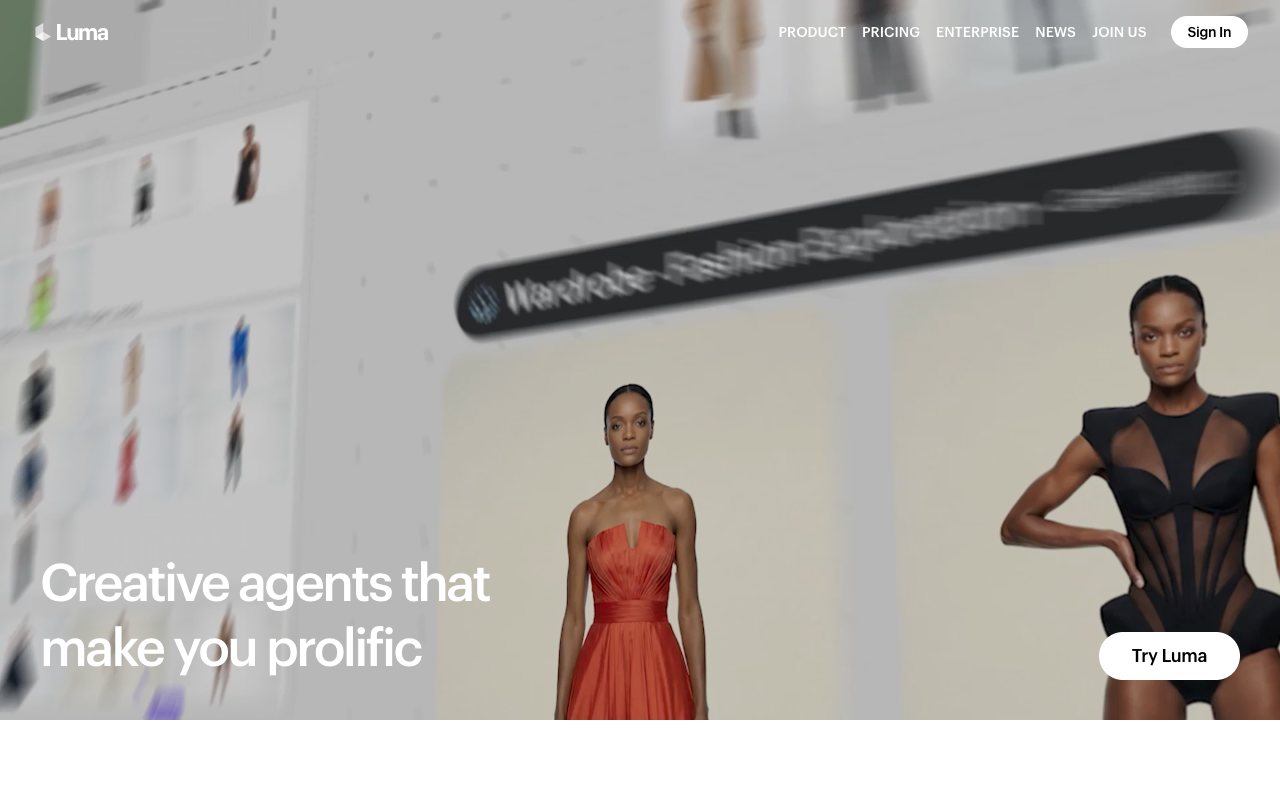
Agents chain takes, styles, and edits automatically, reducing manual work to produce a sequence.
Access to integrated third-party models
From the same plan you can use additional image and video models, avoiding jumping between products.
Real free tier for testing
Although with watermark and no commercial use, the 30 monthly generations let you genuinely try out Ray2.
API available for products
Dream Machine API is exposed directly and also through Fal, making it easy to integrate into apps.
Limitations to consider
Expensive paid tier pricing
The jump from Free to Plus is $30/mo and Pro and Ultra plans multiply costs fast; price/quality is worse than Runway Standard.
Quality below Gen-4.5 in benchmarks
Runway Gen-4.5 still wins on narrative coherence and advanced cinematic control in 2026.
Free with watermark and no commercial use
To use anything in production you have to upgrade to Plus at minimum, limiting the free tier to learning.
Less mature technical documentation
The SDKs and API guides are less polished than Fal's or Replicate's.
Standout Feature
Ray2 with clips up to 60 seconds and Luma Agents orchestrating takes make Dream Machine the most narrative- and long-term consistency-oriented product among video models accessible to individual creators in 2026.
Comparison with Alternatives
Against Runway it's less powerful in creative tools but more focused on agentic workflows; against Veo 3.1 Lite it offers better UX and creative control, though at higher effective cost; against Kling it has better agent integration and creative workflow.
Ideal User
Creators, content and marketing teams looking to generate quality video with references and starting images, who want to experiment with creative agents to assemble sequences without running an advanced editor. Also fits products that expose video generation to end users.
Learning Curve
The interface is very friendly and lets you generate clips on the first try. The complex part comes when you want to control characters, use Luma Agents at an advanced level, or integrate the API cost-efficiently.
Best For
- Creators who want to generate video clips with references and consistent characters
- Marketing teams iterating fast visual variants
- Products that want to use Ray2 via API for on-demand generation
- Users who value Luma Agents for orchestrating long takes
- Creative projects needing video up to 60 seconds with good coherence
Not Ideal For
- Projects that demand maximum cinematic quality (Runway Gen-4.5 usually leads)
- Users with very tight budgets who need commercial use
- Professional workflows requiring ProRes export or NLE integration